

The Geographical Trap
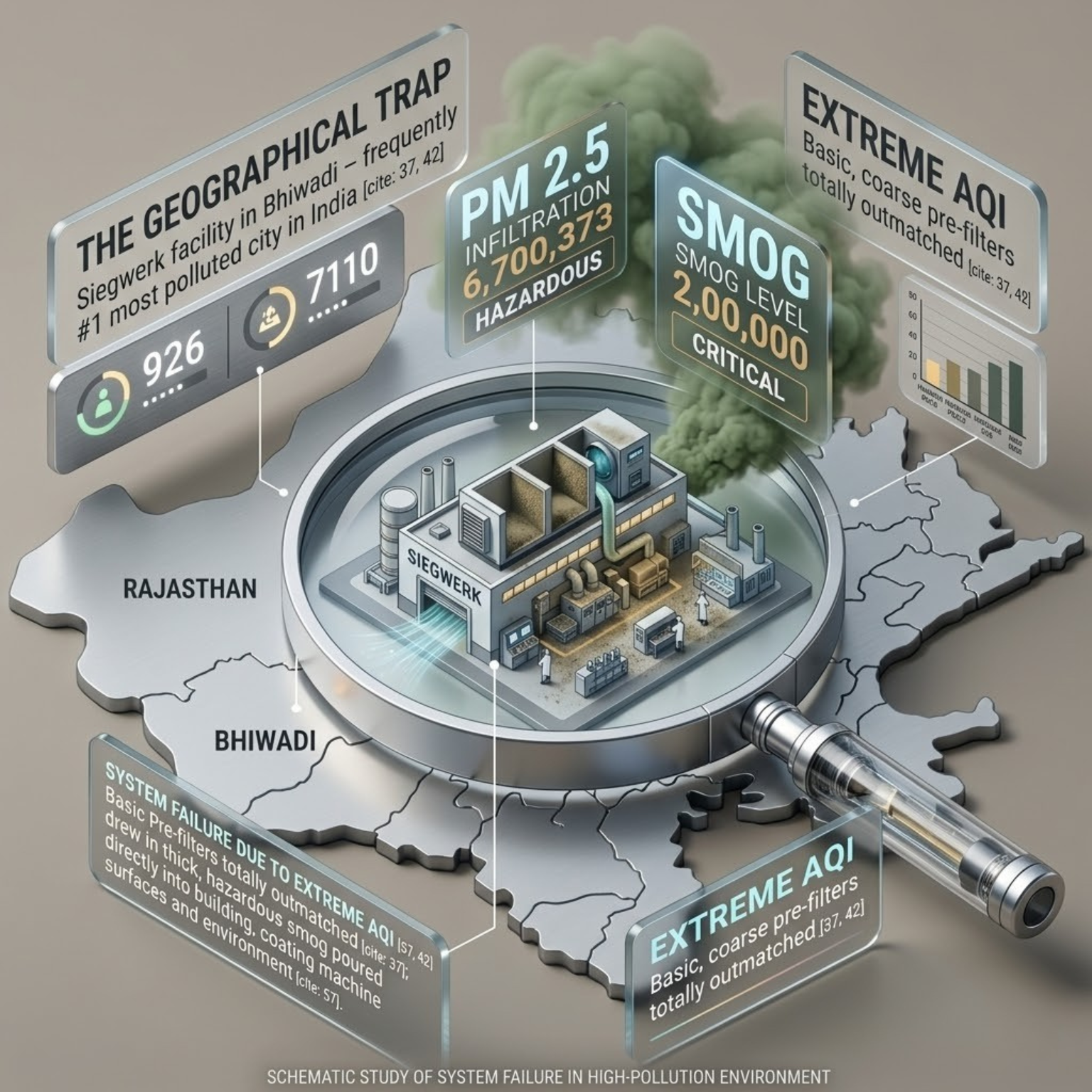
Siegwerk’s facility is located in Bhiwadi, Rajasthan—a city that frequently ranks as the number one most polluted city in India. The outdoor air is a constant, heavy barrage of severe particulate matter (PM10 and PM2.5).
The facility's existing Air Handling Units (AHUs) were equipped with only basic, coarse pre-filters. These legacy systems were completely outmatched by the extreme AQI. The moment the facility opened its doors or drew in fresh air, thick, hazardous smog poured directly into the building, coating the environment in dust.
The Chemical Trap
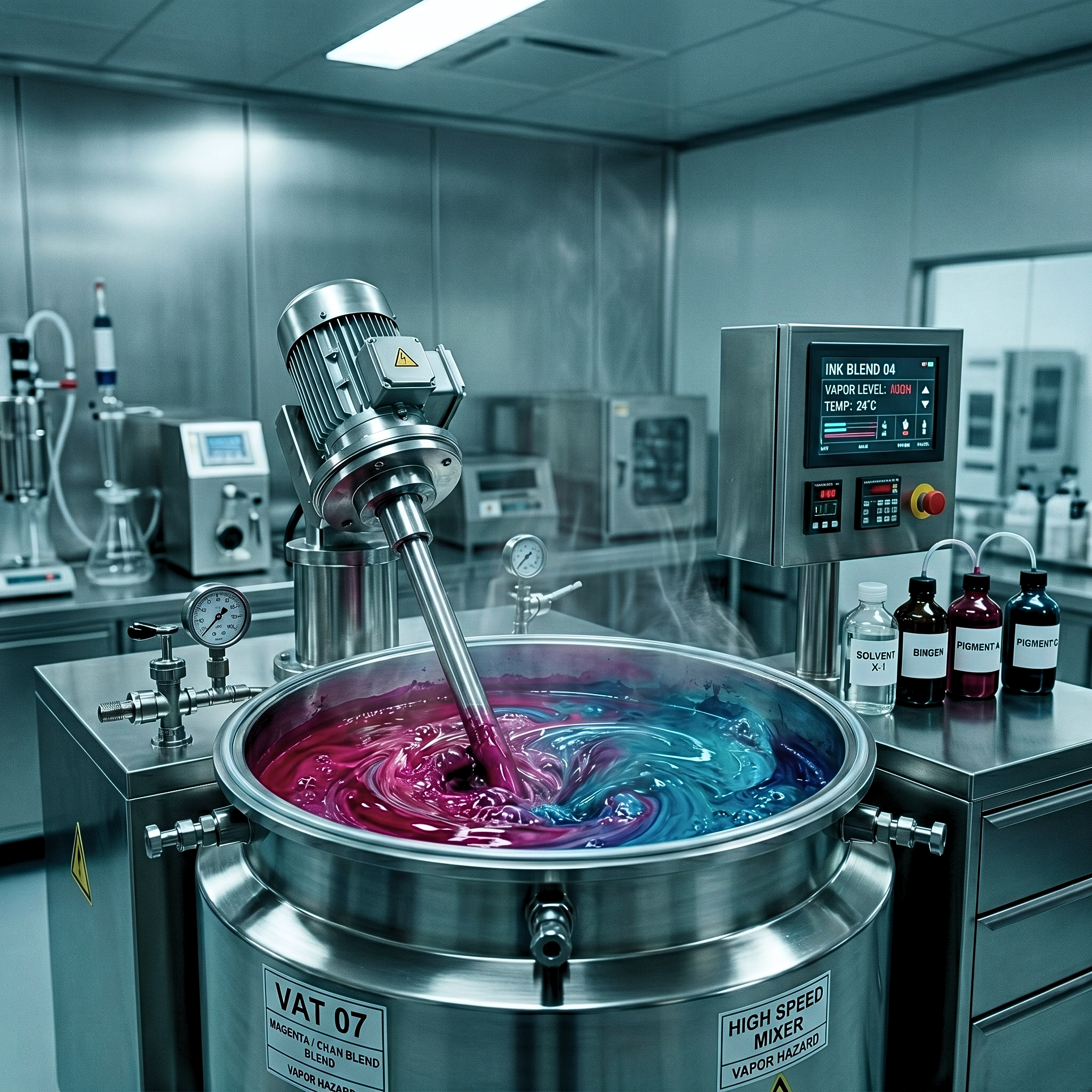
While the outside environment flooded the building with dust, the inside operations generated a completely different hazard. Ink manufacturing requires heavy, volatile chemicals. Inside the Technology Lab and TAD departments, massive quantities of strong solvents like Ethyl Acetate, IPA, and Ammonia are continuously mixed.
As these raw materials are processed, they rapidly evaporate into the factory air, releasing highly concentrated Total Volatile Organic Compounds (TVOCs). The facility wasn't just dealing with outdoor pollution; it was actively manufacturing a toxic atmosphere from within.
The Density Exhaustion
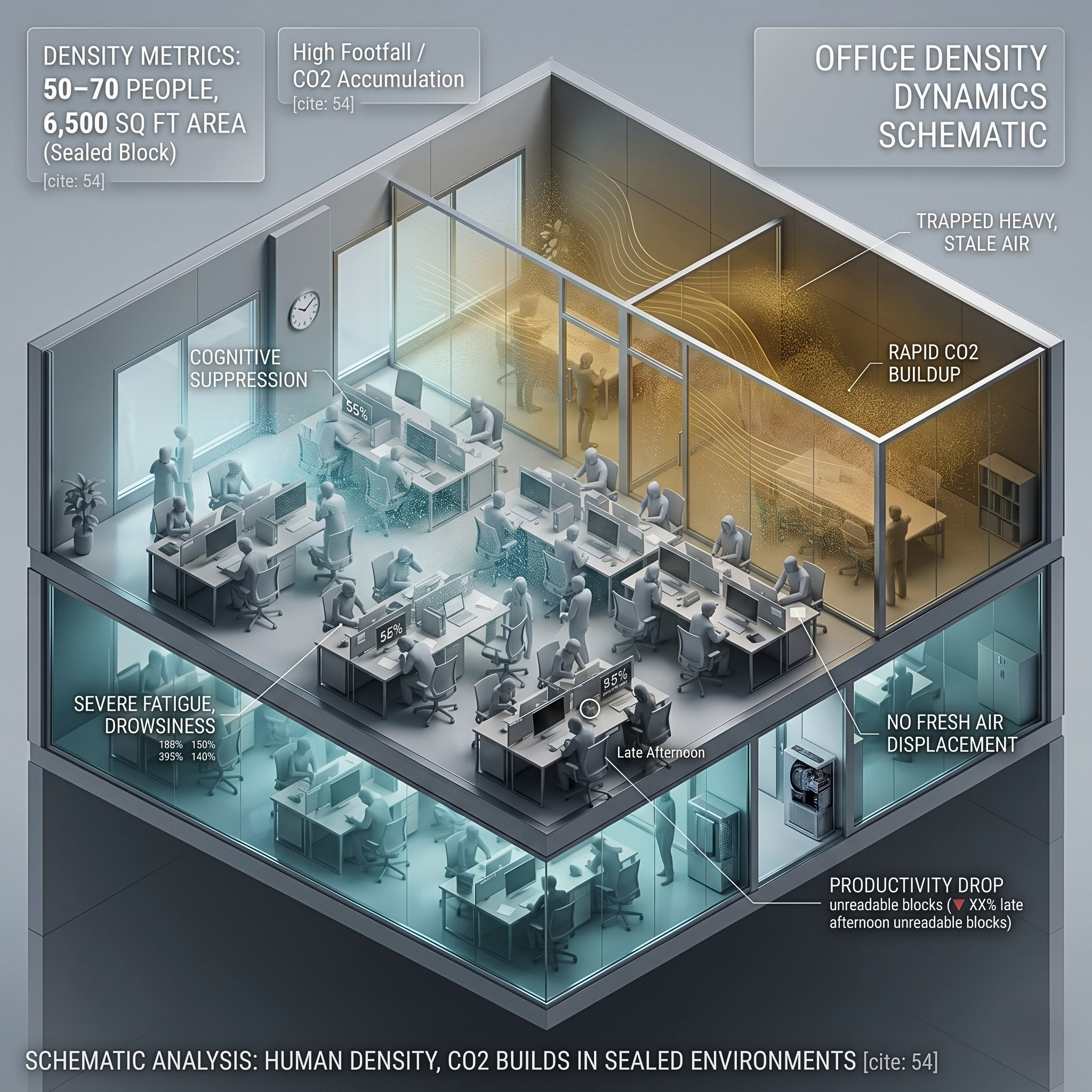
The final layer of the crisis was human density. In the Accounts Block, between 50 to 70 people navigate a contained 6,500 square foot carpet area every single day. In a sealed environment, human breathing creates a rapid buildup of Carbon Dioxide (CO₂).
Without properly treated fresh air displacing it, the CO₂ became trapped. As the workday progressed, this heavy, stale air actively suppressed cognitive function, causing severe fatigue, drowsiness, and a massive drop in workforce productivity by the late afternoon.
The Clean Air Bubble.
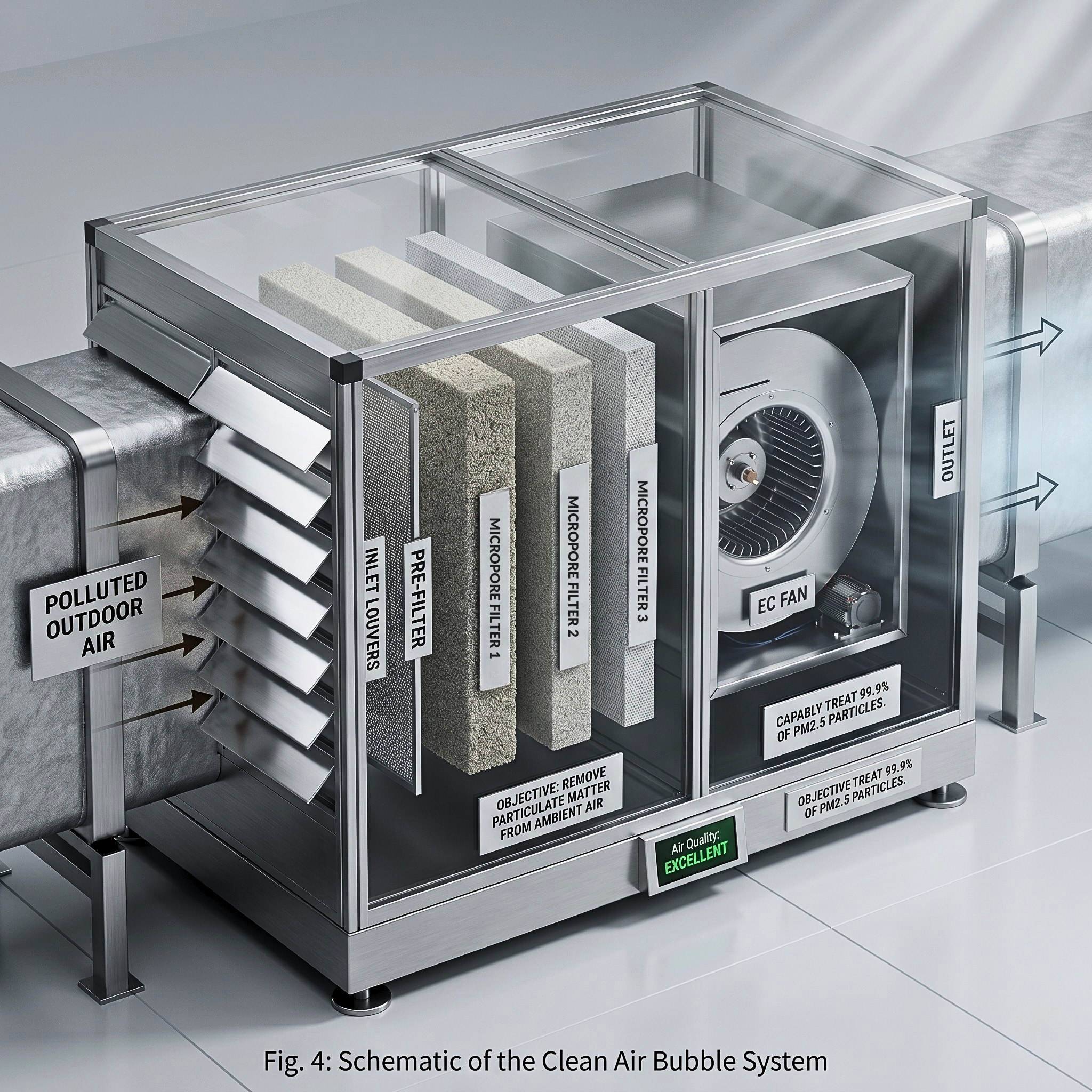
Standard air purifiers could not solve a dual-front crisis. We engineered a split-system architecture: one engine dedicated to blocking the outdoor smog and diluting CO₂, and another dedicated purely to hunting down indoor chemical vapors.
The Fresh Air Injection
To dilute the suffocating CO₂ in the Accounts Block, we had to safely bring in outside air. We installed high-capacity Fresh Air Units equipped with multistage particulate filtration. These units strip away 99.9% of Bhiwadi’s extreme PM2.5 smog before it enters the building. To preserve the office aesthetics, we routed the clean air through custom curved GI ducts completely hidden above the false ceiling, delivering pure oxygen seamlessly through discreet diffusers.
The Y-CAB Chemical Scrubber
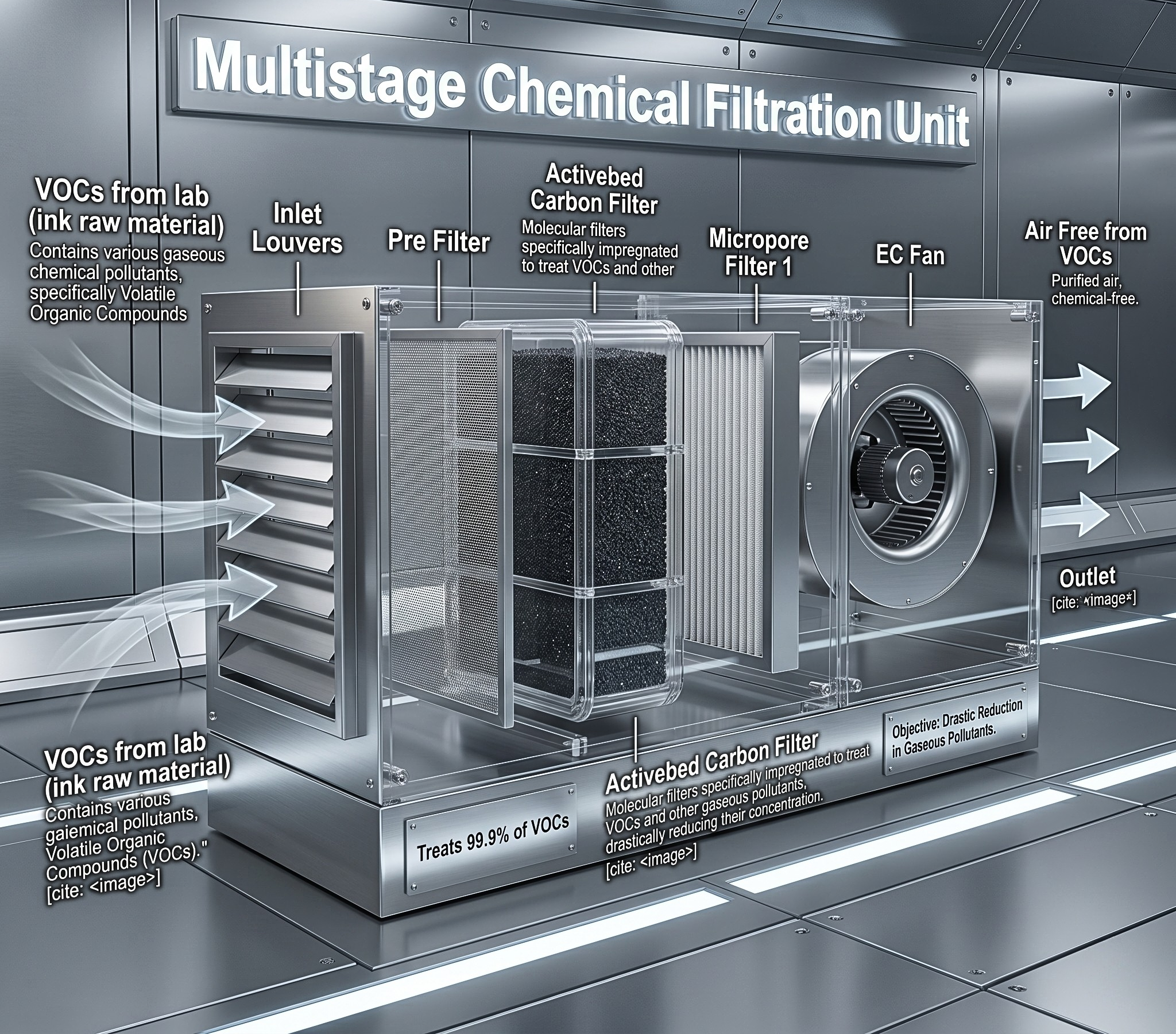
With the outdoor threat blocked, we deployed specialized Y-CAB Recirculation Units to combat the indoor ink solvents. These units constantly scrub the internal air. Instead of standard filters, they are packed with specially impregnated activated carbon. As the afternoon chemical spike hits, these molecular beds aggressively trap and permanently destroy the hazardous TVOCs, ensuring the air remains pristine and toxic-free.
The Proof is in the Air.
A premium engineering solution requires absolute transparency. We transformed a hazardous, dual-threat industrial zone into a safe, breathable sanctuary that meets the strictest global health standards.
Particulate Control
Bhiwadi’s extreme smog is completely blocked. PM2.5 levels are strictly maintained below the World Health Organization's recommended safe limits, ensuring pristine respiratory conditions.
TVOC Eradication
The dangerous 3:00 PM chemical spikes are gone. The Y-CAB molecular scrubbers instantly trap and destroy evaporating ink solvents, neutralizing occupational health risks entirely.
Cognitive Protection
By continuously flushing the Accounts Block with treated, oxygen-rich air, CO₂ accumulation is permanently suppressed. Workforce fatigue has been replaced with sustained concentration.
Engineered for Human Life.
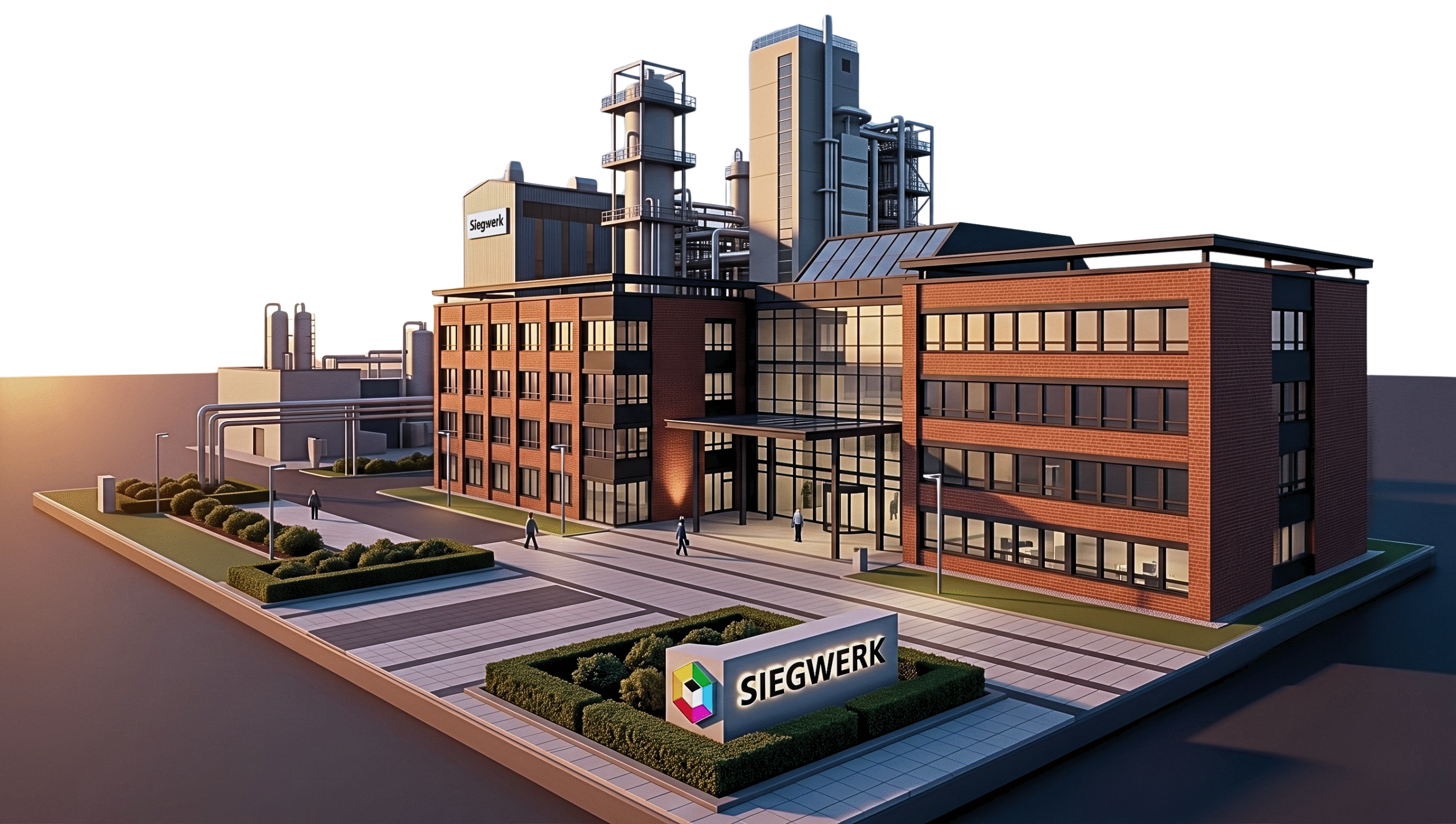
In heavy industrial manufacturing, safety cannot rely on basic filters. It requires intelligent, facility-wide atmospheric control. By capturing the invisible threats at their source, Siegwerk can operate its highly volatile ink production lines at maximum capacity without compromising on safety.
We eliminated the environmental liabilities, restored total cognitive function to the workforce, and transformed one of the harshest manufacturing processes in India into an environment engineered for human life.
