

The Challenge of Volumetric Scale
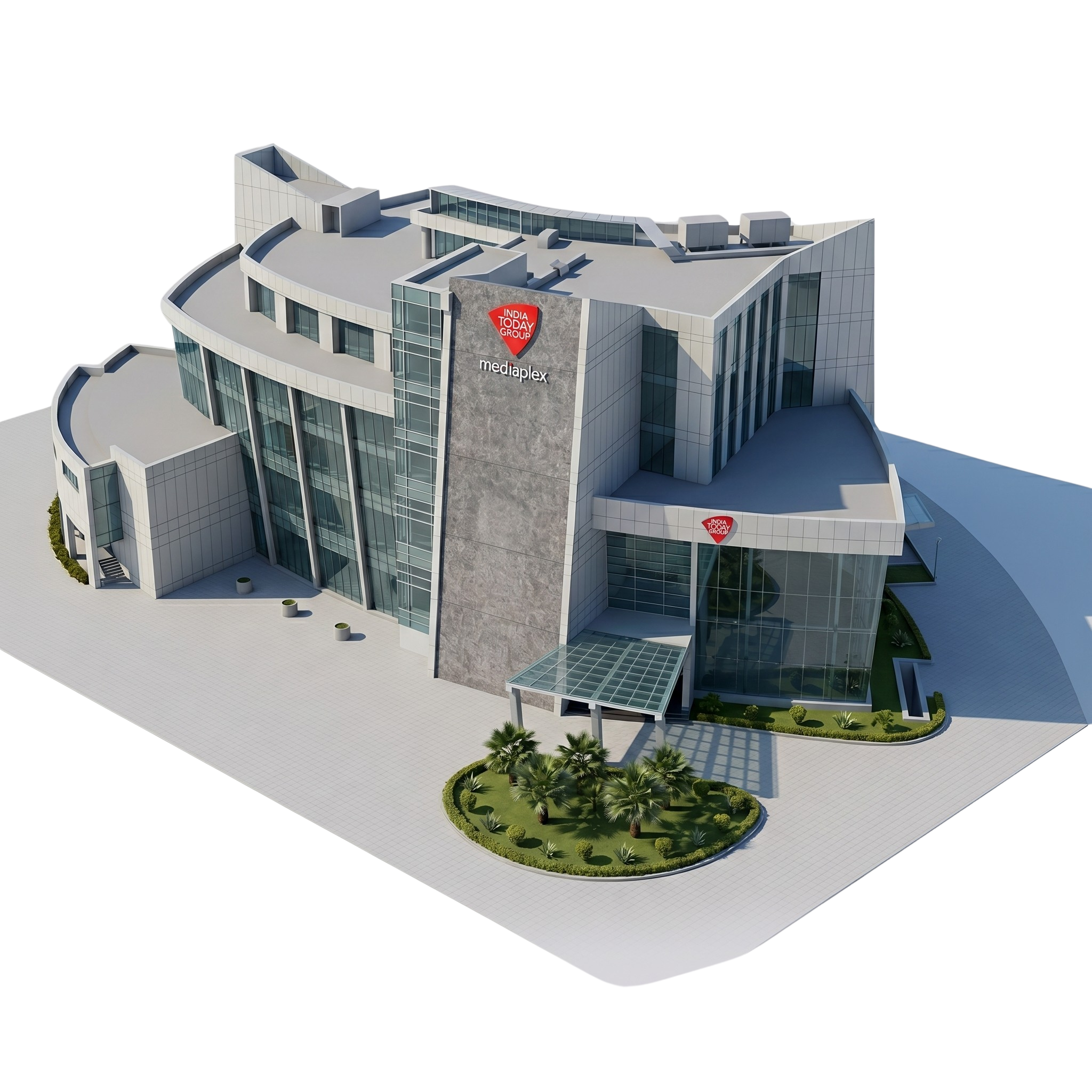
The India Today Group Mediaplex, situated in Sector 15A, Noida, presents an immense structural footprint. Spanning approximately 300,000 square feet across six floors, the facility incubates more than 2,500 personnel working continuously within a high-density broadcasting environment.
The core architectural complexity is a massive central dome situated within the heart of the building. Because all six floors are physically open and interconnected around this singular dome, isolating localized air quality incidents was impossible. Any contaminants entering the facility naturally migrated through the vast, shared 3 Lakh square foot ecosystem, threatening both human performance and electronic stability.
The Geographical Threat Profile
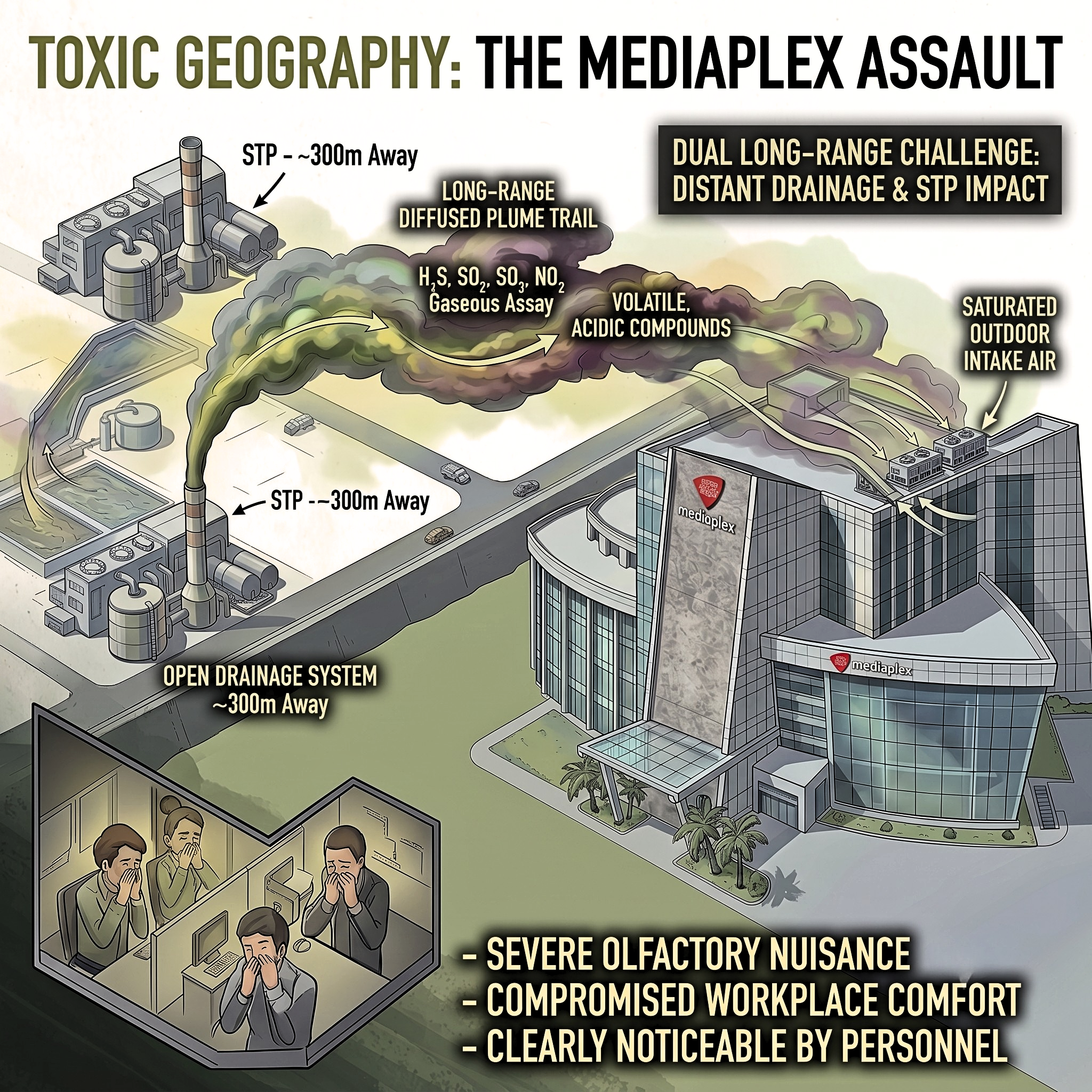
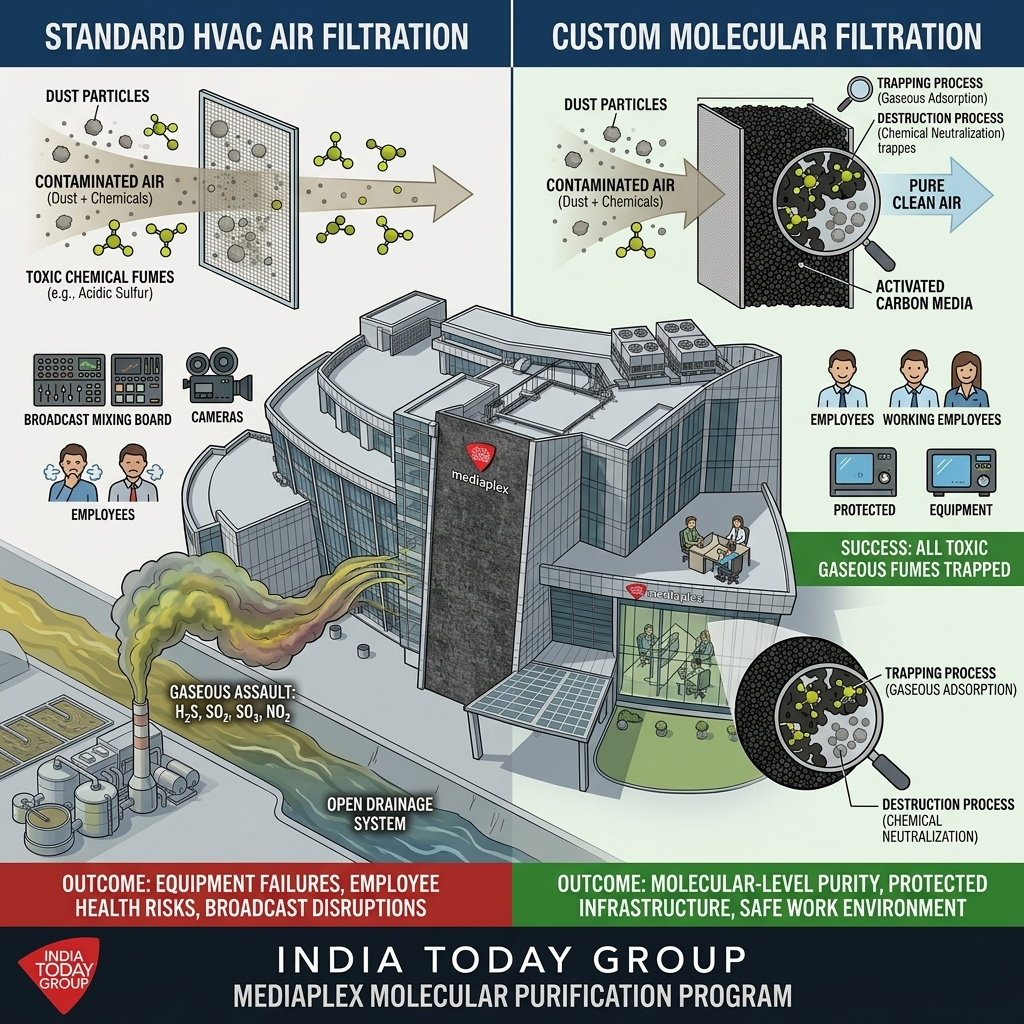
While the internal architecture was complex, the external geography created an active environmental crisis. The Mediaplex is located in close proximity to an immense open drainage system running adjacent to the facility's perimeter. Compounding this challenge, a high-capacity Sewage Treatment Plant (STP) actively vents exhaust gas directly near one of the building's main towers.
This hazardous geographical alignment subjected the facility to an ongoing, high-concentration chemical assault. The outdoor intake air was heavily saturated with volatile, acidic compounds, specifically Hydrogen Sulfide (H₂S), Sulfur Dioxide (SO₂), Sulfur Trioxide (SO₃), and Nitrogen Dioxide (NO₂). These gases created a severe, persistent olfactory nuisance that compromised workplace comfort and was clearly noticeable by personnel inside the facility.
The Mission-Critical Hardware Crisis
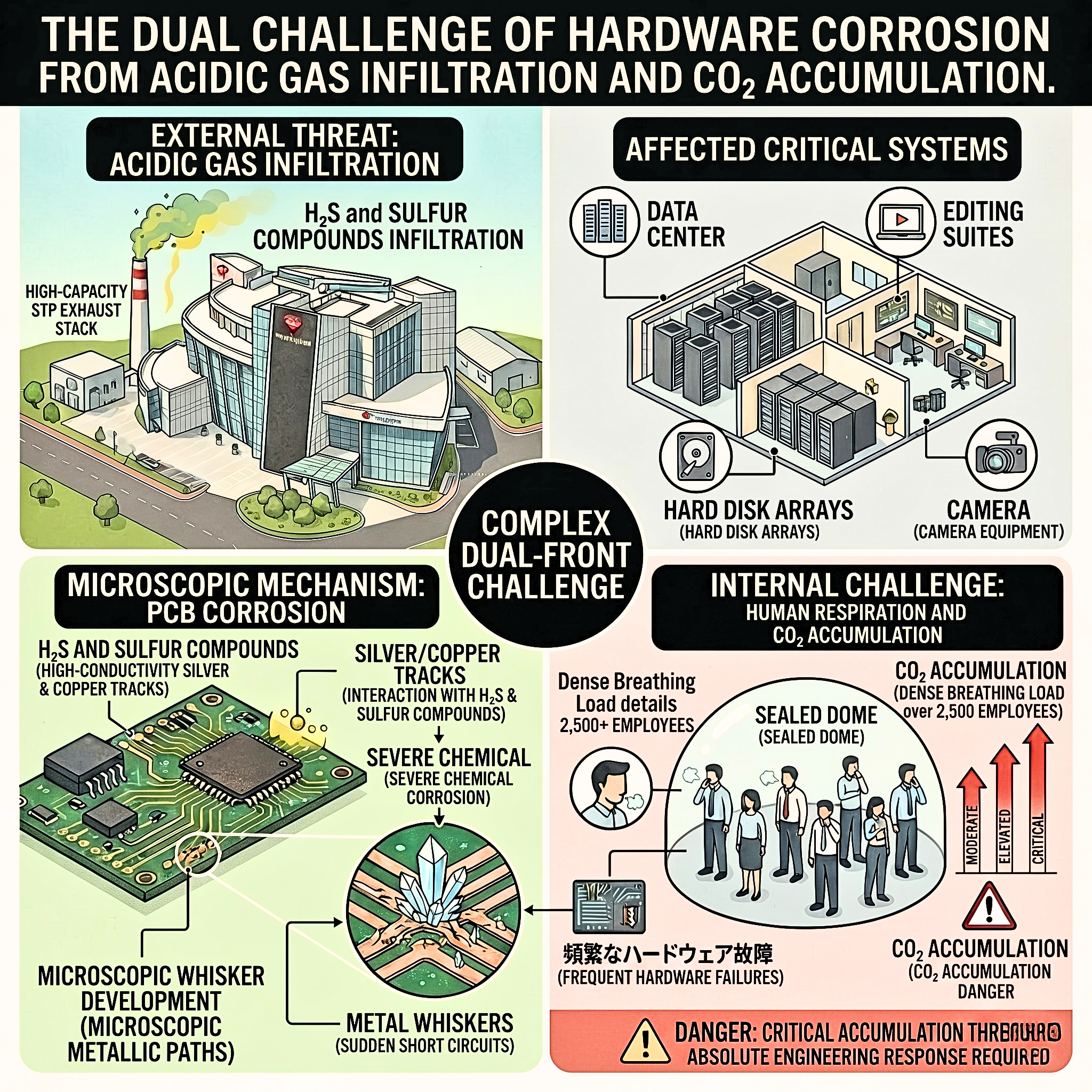
Beyond the sensory nuisance, the infiltration of these acidic gases created a critical technical liability. As a premium broadcasting and media house, the facility operates dense arrays of specialized data centers, editing suites, hard disk arrays, server nodes, and sensitive camera equipment.
Modern micro-electronics rely heavily on high-conductivity silver and copper tracks on their Printed Circuit Boards (PCBs). When the infiltrated H₂S and sulfur compounds interacted with these circuit elements, they triggered severe chemical corrosion, forcing the rapid development of microscopic metallic paths known as "whiskers." These crystalline growths bridged separate tracks, causing sudden short circuits and frequent hardware failures across the network.
Simultaneously, the dense breathing load of 2,500+ employees beneath a sealed dome drove dangerous accumulations of Carbon Dioxide (CO₂), establishing a complex, dual-front challenge requiring an absolute engineering response.
Creating an Invisible Shield.
To solve a crisis of this scale, standard filtration wasn't enough. We engineered a three-pillar system to seal the perimeter, destroy the toxic gases, and optimize operational costs.
Sealing the Leaks
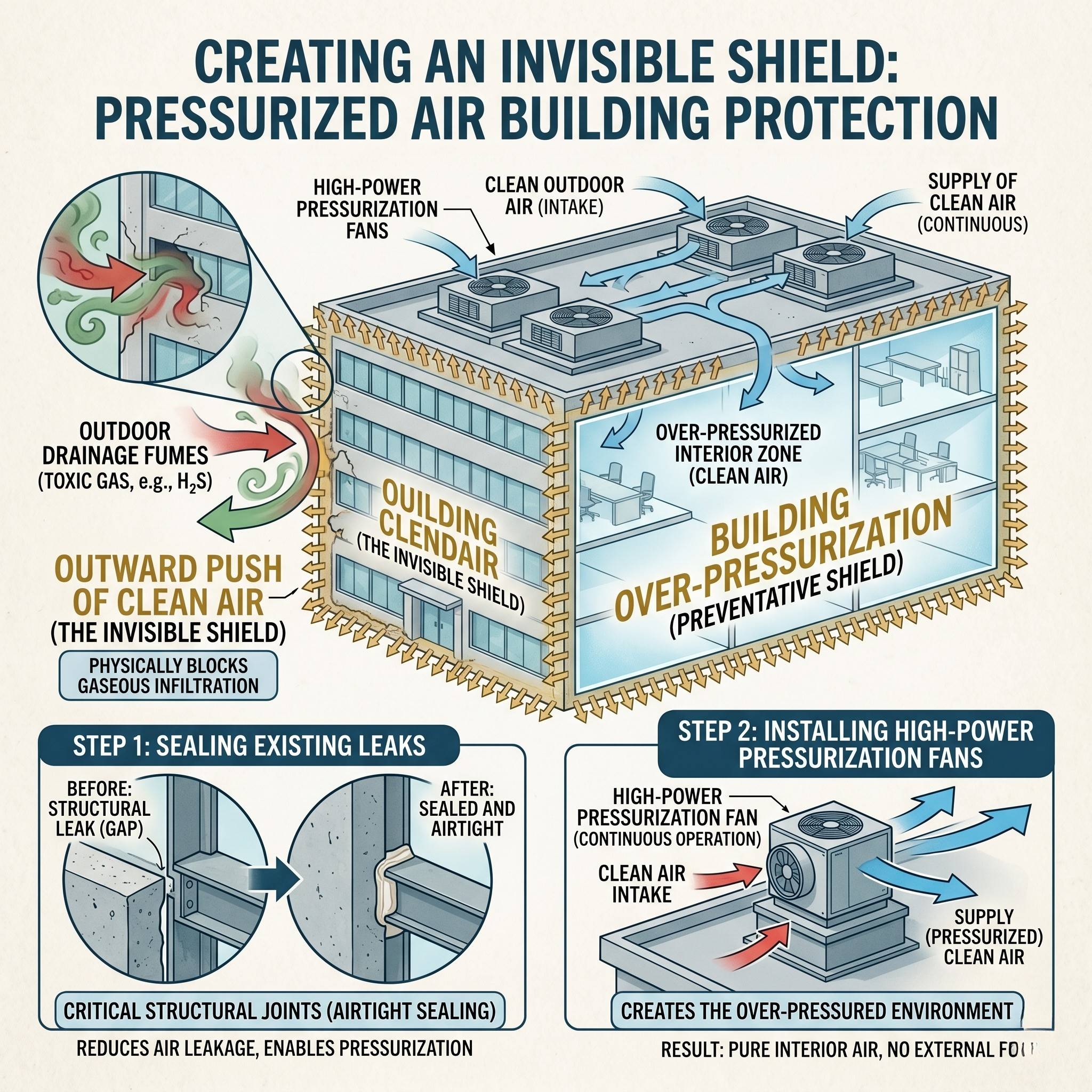
We couldn't just clean the air; we had to stop the toxic outdoor gases from sneaking in. We sealed the building's existing structural leaks and installed high-power fans. This creates a pressurized, outward push of clean air—an invisible shield that physically blocks the drainage fumes from entering the building.
Trapping the Acid Gases
Standard air filters only catch dust; they are completely useless against toxic chemicals. We designed custom molecular filtration beds packed with activated carbon. These beds literally trap and chemically destroy the acidic sulfur fumes before they ever reach the broadcast equipment or the employees.
Smart Air Recycling
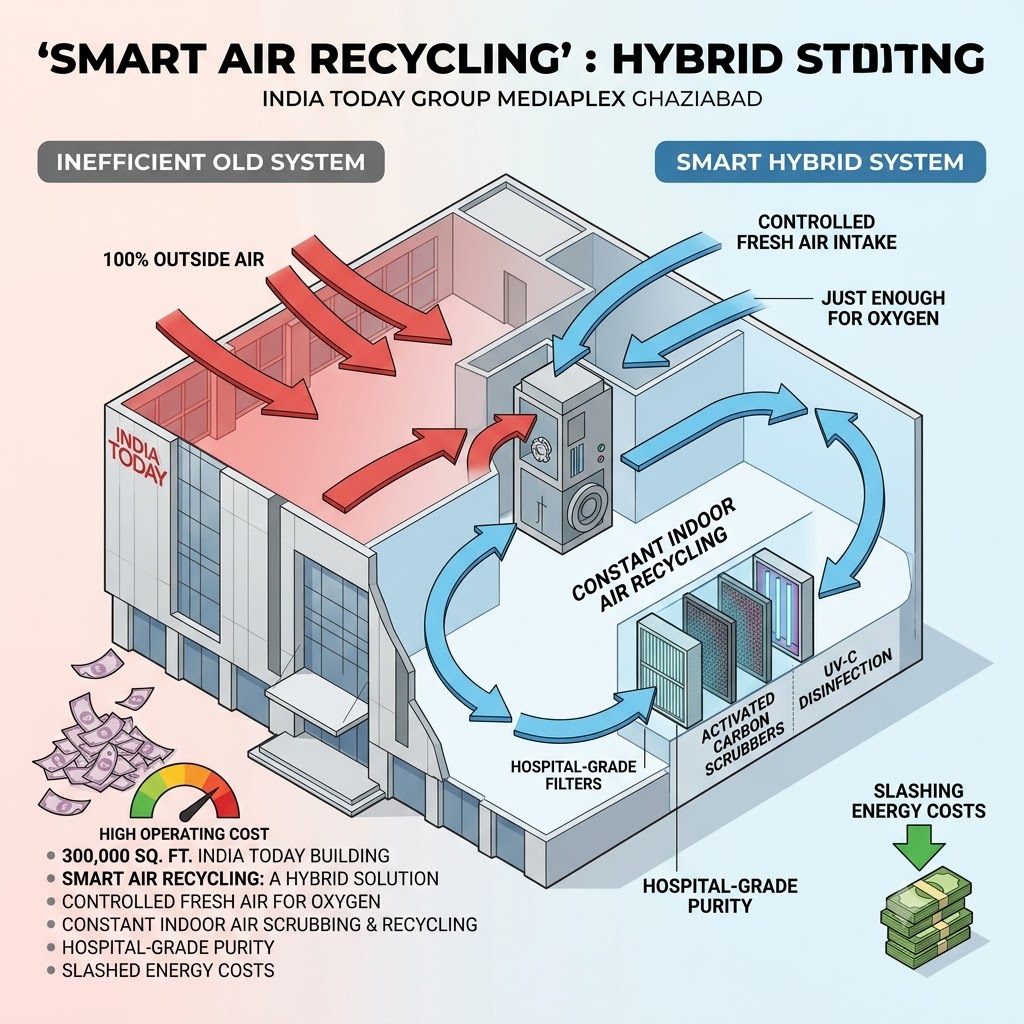
Flooding a massive 300,000 sq. ft. dome with 100% outside air is incredibly expensive to run. Instead, we built a hybrid system. We bring in just enough fresh air to keep oxygen levels high, while constantly scrubbing and recycling the indoor air. This delivers hospital-grade purity while slashing energy costs.
Unquestionable Proof.
Every Single Second.
We didn’t just build an invisible shield and walk away. To prove the mammoth difference our system makes, we deployed a dedicated network of six high-precision indoor sensors and one outdoor monitor. This creates a live, second-by-second performance comparison.
Instead of relying on delayed public government data, we brought in globally renowned sensor technology. We then installed live digital tickers across all six floors of the Mediaplex.
For the first time, all 2,500 employees could look up and see the live indoor air quality, particulate matter, and safely managed carbon dioxide levels—directly contrasted against the toxic outdoor environment. The result is total transparency and a guaranteed hospital-grade sanctuary.
